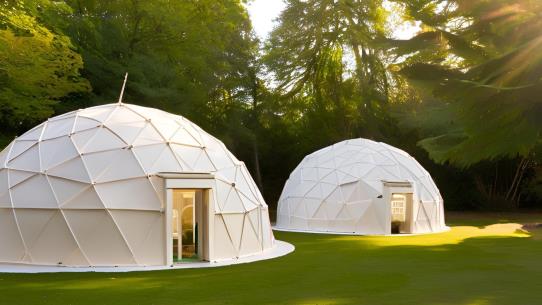

Solar Dome Tent Fan Q-A Your Top 10 Questions Answered
Solar Dome Tent Fan Q&A: Your Top 10 Questions Answered
Living in a geodesic dome tent is an amazing experience — close to nature, energy efficient, and visually stunning. But there’s one challenge every dome owner faces: stale air, heat buildup, and moisture condensation inside the dome.
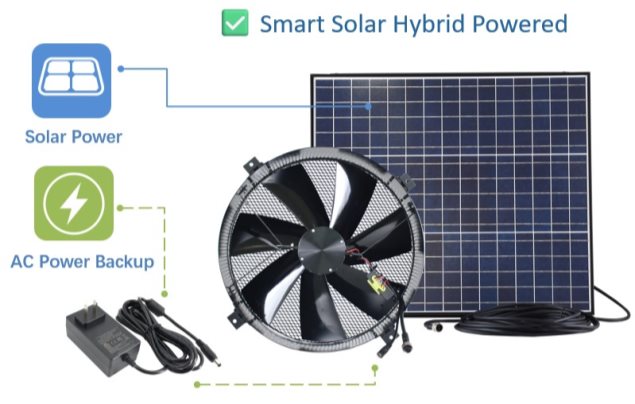
The solution? A solar powered dome tent fan that runs on free sunlight, keeps fresh air circulating, and even works at night with backup power.
In this Q&A guide, we answer the most frequently asked questions about the SIPL Solar Dome Tent Fan — including how it works, installation, noise level, night operation, and whether it’s worth your investment.
1. What is a solar dome tent fan and why does a dome need one?
Answer:
A solar dome tent fan is a self-contained roof-mounted ventilation fan specifically designed for geodesic domes. It uses a solar panel to power a high-efficiency brushless DC motor, which actively exhausts hot, stale air from inside the dome while drawing in fresh, cool air from outside.
Why domes need active ventilation:
|
Dome Problem |
Without Ventilation |
With SIPL Solar Fan |
|
Heat buildup |
40–50°C (104–122°F) near roof |
Keeps dome cool, <30°C |
|
Stale air |
CO₂ and odors accumulate |
Continuous fresh air exchange |
|
Moisture condensation |
Mold, mildew, damaged fabrics |
Dry, healthy interior |
|
Sleeping comfort |
Hot, stuffy, restless nights |
Cool breeze, restful sleep |
Unlike traditional windows or passive vents, the SIPL solar fan works actively — it pumps out heat and humidity as soon as the sun rises, and can run 24/7 with optional backup power.

2. How does the SIPL solar dome tent fan work? Is it really “wiring‑free”?
Answer:
Yes, it is truly wireless in its standard solar‑only configuration.
· Solar panel (25W monocrystalline) is directly connected to the fan unit — no external AC wiring, no electrician needed.
· When sunlight hits the panel, the IP68 brushless DC motor starts automatically, spinning 7 nylon‑fiberglass fan blades (14″ diameter).
· Hot air near the dome’s peak is exhausted through the air duct, and fresh outside air is drawn in through lower openings or windows.
· The fan runs at zero electricity cost during sunny hours.
For nighttime or cloudy days, you can add an AC/DC adapter. The fan then switches automatically to grid power when solar is insufficient — but still with very low power consumption.
3. Can the solar dome tent fan run at night or on cloudy days?
Answer:
In solar‑only mode, the fan runs only when sunlight is sufficient — typically from sunrise to late afternoon. On completely cloudy days, output drops significantly.
But you can upgrade to 24‑hour operation by adding the optional AC/DC adapter. Here’s how it works:
· ☀️ Sunny daytime: Fan runs 100% on free solar power — zero energy cost.
· ⛅ Cloudy / low sun: Fan automatically uses a mix of solar + grid power (via adapter) to maintain continuous operation.
· 🌙 Nighttime / no sun: Fan runs entirely on grid electricity, but consumes very little power.
This hybrid system ensures your dome stays ventilated around the clock — even during long winter nights or rainy weeks.
Tip: If you live off‑grid, you can also pair the fan with a solar battery.

4. Is it difficult to install on a geodesic dome? Do I need special tools?
Answer:
Installation is surprisingly simple — designed for DIY dome owners.
What’s included:
· Fan unit (fully assembled with solar panel mounted on top)
· Mounting base (fits curved dome surfaces)
· Metal fan guard
· 10m cable (for panel connection if separate)
· Installation screws / brackets
Basic steps (typical dome roof installation):
1. Cut a 368mm diameter hole in your dome’s roof panel (or use an existing vent opening).
2. Attach the fan base to the roof.
3. Secure the fan unit into the base.
4. Place the solar panel in a sunny spot (on the roof or nearby ground).
5. Connect the cable — no wiring, just plug‑and‑play connectors.
6. Turn on (auto‑starts with sunlight).
No electrician, no special tools — just a drill, jigsaw, and basic hand tools.
5. How noisy is it? Will it disturb sleep or conversations inside the dome?
Answer:
Very quiet. The SIPL dome tent fan uses a brushless DC motor (no carbon brushes, no mechanical commutation) and computer‑balanced 7 blades. The rated noise level is ≤45 dB.
To give you perspective:
|
Sound source |
Decibel level |
|
Quiet library |
40 dB |
|
SIPL solar fan |
45 dB |
|
Refrigerator hum |
50 dB |
|
Normal conversation |
60 dB |
Inside a dome, you will hear a soft, steady whoosh — like a gentle breeze. It won’t disturb sleeping, meditation, or conversations. Many users find it helps mask outside noise (rain, wind, distant traffic).
6. What about moisture, mold, and condensation? Does the fan really help?
Answer:
Yes — effectively. Condensation is a major problem in domes because warm, humid air rises and hits the cooler roof surface, forming water droplets. Over time, this leads to:
· Mold and mildew on fabric, wood, or insulation
· Rotting of dome joints and wooden frames
· Unpleasant musty smell
· Potential health issues (allergies, respiratory)
The SIPL solar fan solves this by actively exhausting the warm, moist air at the dome’s peak before it can condense. The continuous air exchange keeps humidity levels balanced with outside air.
Real‑world result: Dome owners in humid climates (Florida, Southeast Asia, UK) report that after installing the SIPL fan, condensation on windows and walls decreases by 70–90%.

7. Can I control it remotely? Is there a smartphone app?
Answer:
Yes — with the optional Smart Remote Control.
The remote offers:
· Temperature control – Set desired temp; fan auto‑adjusts speed.
· Humidity control – Turns on/off based on humidity level.
· Speed adjustment – 3+ speeds (varies by model).
· Re‑on timer – Set fan to run for X hours then auto‑off.
· Smart AUTO mode – Automatically balances fan speed with real‑time temp/humidity.
· Backup power control – Manage AC adapter switching.
For smartphone users, the remote works with the “Smart Life” APP (iOS/Android). You can then control the fan from anywhere — check status, adjust settings, or schedule ventilation even when you’re away.

8. How durable is it? Will it survive rain, snow, and UV exposure?
Answer:
Extremely durable — built for all‑weather outdoor use.
|
Component |
Material / Protection |
|
Fan housing |
Galvanized steel + anti‑UV powder coating — rustproof, won’t fade |
|
Fan guard |
Metal circular guard, corrosion‑resistant |
|
Motor |
IP68 waterproof (submersible rating) — rain, snow, dust no problem |
|
Solar panel |
Tempered glass monocrystalline, weather‑sealed |
|
Cables |
UV‑resistant outdoor cable (10m, plug‑and‑play) |
|
Warranty |
5 years (covers defects, motor, panel) |
Lifespan expectations:
· Metal casing: >15 years
· Solar panel: >25 years
· BLDC motor: >10 years
Suitable for desert sun, heavy rain, freezing snow, and high humidity — no corrosion, no performance loss.
9. Will this fan fit my dome tent? What size dome can it handle?
Answer:
The SIPL solar dome tent fan is designed for geodesic domes of all sizes, but optimal performance depends on air volume.
The fan’s 368mm diameter air duct fits standard roof openings. For smaller domes (e.g., 6m diameter), one fan is plenty. For extra‑large domes (10m+), you can install two or more fans.
10. Is it worth it?
|
Without fan |
With SIPL fan |
|
Dome too hot to use in summer |
Comfortable year‑round |
|
Condensation ruins fabric/wood |
Dry interior, no mold |
|
Stale air, stuffy sleeping |
Fresh air, better sleep |
|
Must use electric fan (grid power) |
Free solar ventilation |
|
Manual window opening |
Automatic, set‑and‑forget |
Most dome owners say the fan pays for itself in one summer through comfort and energy savings. And with a 5‑year warranty, it’s a low‑risk investment.
Final Verdict: Should you buy the SIPL solar dome tent fan?
Yes — if any of these apply to you:
· Your dome becomes uncomfortably hot in summer.
· You see condensation, mold, or musty smells inside.
· You want to save electricity (no running cost during sunny hours).
· You’re building or upgrading an off‑grid dome or tiny home.
· You want a quiet, automatic, maintenance‑free solution.
The SIPL Solar Dome Tent Fan combines BLDC motor quality, rugged galvanized steel housing, IP68 waterproofing, and optional smart controls. It’s one of the few solar fans specifically designed for the curved roof and tight envelope of a geodesic dome.
Still have questions? Contact us directly!

-
How Can Solar Powered Vent Fans Improve Your Home Cooling
넶55 2026-07-17 -
-
-
-
-