

Solar Ventilation Q-A How to Claim Your “Free Lunch” from the Sun
Solar Ventilation Q&A: How to Claim Your “Free Lunch” from the Sun
The concept of a “free lunch” from the sun is becoming a reality for homeowners and businesses looking to cut energy costs. But how exactly do solar-powered ventilation systems work, and are they truly effective? We’ve compiled answers to the most common questions based on the technology behind modern solar ceiling ventilators.
Q1: What does “The Sun’s Free Lunch” mean in the context of ventilation?
A: The phrase refers to the abundant, clean solar energy available every day that is currently underutilized for small-scale devices. According to the document from SIPL, while large solar panels power homes, a “silent energy revolution” is happening with small devices like exhaust fans. By using a direct solar panel-to-fan setup, you consume energy at the source, eliminating grid dependency and making ventilation essentially free during daylight hours.
Q2: How much energy does a traditional exhaust fan actually consume?
A: More than you might think. A typical AC-powered exhaust fan uses 30–50 watts. If run for just 12 hours a day, it consumes about 0.5 kWh daily, which adds up to over 180 kWh per year per fan. When multiplied across multiple fans in a home or commercial space, this represents a significant portion of an electricity bill dedicated solely to moving air.

Q3: Why isn’t a standard home solar panel system efficient for small fans?
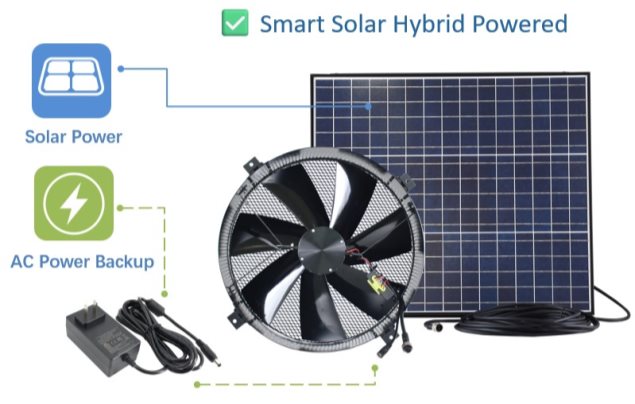
A: Traditional home rooftop solar systems are designed for high-wattage loads like refrigerators or air conditioners. Using that converted, grid-tied power for a tiny 40-watt fan is inefficient. It’s compared to “using a national highway to deliver a single letter.” The most elegant solution is direct pairing, where the solar panel powers the fan directly without conversion losses.
Q4: What is a “BLDC motor,” and why is it important for solar fans?
A: BLDC stands for Brushless DC Motor. Unlike traditional AC motors, the BLDC motor is a game-changer for solar applications because:
· Efficiency: It converts more of the sun’s variable power into useful airflow.
· Durability: It lasts over 10 years.
· Compatibility: It runs perfectly on the direct current (DC) generated by solar panels without needing an inverter.
Q5: How do solar fans run at night or on cloudy days?
A: This is where the “intelligent energy management” system comes in. Modern solar ventilators use a smart controller that acts as the brain of the operation. It prioritizes solar power first. Only when solar input drops (due to clouds or nightfall) does it seamlessly switch to a backup source, such as a stored solar battery or a minimal grid connection via an adapter. This ensures 24/7 climate control without wasting energy.

Q6: What are the main benefits of using SIPL’s solar ventilation philosophy?
Based on the document, the core benefits include:
1. True Zero-Cost Operation (Day): Uses a high-efficiency solar panel to power the fan directly during daylight.
2. Energy Independence: Frees up grid power by decoupling small, essential loads from the main electrical system.
3. 24/7 Climate Control: Leverages the sun first, then uses minimal backup to fight humidity and heat around the clock.

Ready to Start Your Energy Revolution?
Stop paying to ventilate your home. By strategically decoupling your small, essential loads from the grid, you can enjoy fresher air and lower bills.

-
How Can Solar Powered Vent Fans Improve Your Home Cooling
넶55 2026-07-17 -
-

-
-
-